The debate over the future of broadcasting is intensifying, and at its center lies ATSC 3.0 – the next-generation standard that promises to carry free, over-the-air television into the future. Some have raised concerns about certification costs, industry control, or the pace of adoption. But it is important that policymakers, regulators, and our colleagues across the industry understand where the true interests of Low Power Television (LPTV) broadcasters lie.
Broadcasting at a Crossroads
LPTV stations are among the most diverse, community-focused broadcasters in America. From ethnic programming to religious ministries, from rural coverage to hyper-local news, LPTV fills gaps left by larger outlets. To survive in a rapidly changing media ecosystem dominated by subscription streaming and global tech platforms, we cannot stand still.
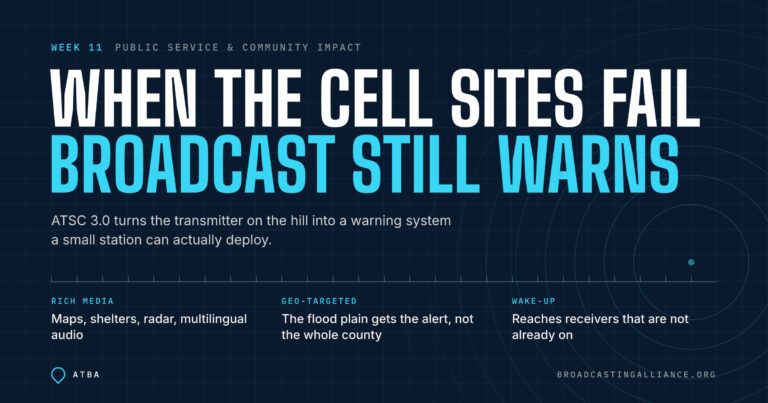
ATSC 3.0 is not just an incremental upgrade. It represents the single best opportunity in decades for LPTV to grow, modernize, and serve our communities more effectively. The new standard enables 4K resolution, immersive audio, datacasting, mobile reception, advanced emergency alerting, and new revenue opportunities like targeted advertising. In short, it gives us tools to stay relevant, competitive, and indispensable.
The Question of Costs
Yes, implementing ATSC 3.0 comes with costs. Certification, equipment, and licensing fees are part of the transition. But cost alone cannot dictate our future. Every major leap in broadcasting – from color TV to digital to high definition – has carried expenses. Each time, broadcasters adapted, innovated, and found ways to make the economics work.
The better question is not whether there are costs, but how we manage them. ATBA supports solutions that make the transition accessible for small operators: shared infrastructure, technical support, potential subsidies, and voluntary adoption for LPTV stations until the economics make sense. With industry collaboration, the financial hurdles are solvable.
Industry Unity Matters
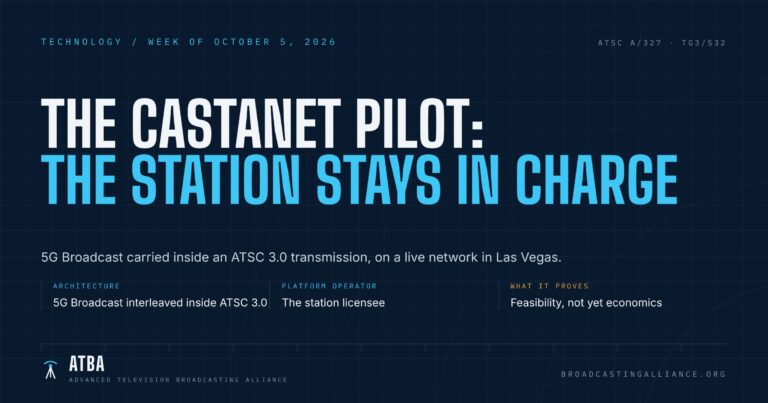
What we cannot afford is fragmentation. Broadcasters—full power and low power alike—must present a unified vision to regulators and the public. ATSC 3.0 already incorporates the technical flexibility to support advanced applications, including compatibility with emerging technologies like 5G. Presenting these innovations as competitors rather than complements undermines the credibility of broadcasting as a whole.
The future of broadcasting depends on standards that are interoperable, secure, and widely supported. ATSC 3.0 is that standard. It is the product of years of collaboration across networks, manufacturers, and technology providers. To suggest otherwise only delays progress and confuses the public.
A Smart Transition Strategy
For full-power stations, a firm transition deadline is necessary. A deadline creates certainty, drives manufacturers to include ATSC 3.0 tuners in consumer devices, and accelerates the market shift that benefits everyone. For LPTV, flexibility should remain: voluntary adoption when resources permit, continued operation in ATSC 1.0 in the meantime, and opportunities to partner with full-power “lighthouse” stations where possible.
This balanced approach ensures that no community is left behind, while still moving the entire industry forward.
The ATBA Position
The Advanced Television Broadcasting Alliance believes that ATSC 3.0 is the future of television broadcasting. It is the best opportunity our industry has to compete in a digital-first media world, to bring viewers free services with modern features, and to preserve the vital role of local stations in America’s media landscape.
We urge the Federal Communications Commission to stay the course on the transition, to recognize that LPTV broadcasters are eager to embrace 3.0 when it is practical, and to understand that unity – not fragmentation -is what will carry this industry forward.
LPTV has always been resilient. We have survived spectrum auctions, relocations, and regulatory uncertainty. We will survive the transition to ATSC 3.0 as well – and not just survive, but thrive. Because the heart of broadcasting has always been local service, innovation, and free access. ATSC 3.0 strengthens all three.
The future is clear. And the future is ATSC 3.0.